.png)
About the PREDICT Study
The PREDICT Study tracks depression over 5 years to identify risk factors and improve care. Find out how this research aims to prevent and better understand depressive disorders in Singapore.
The PREDICT Study
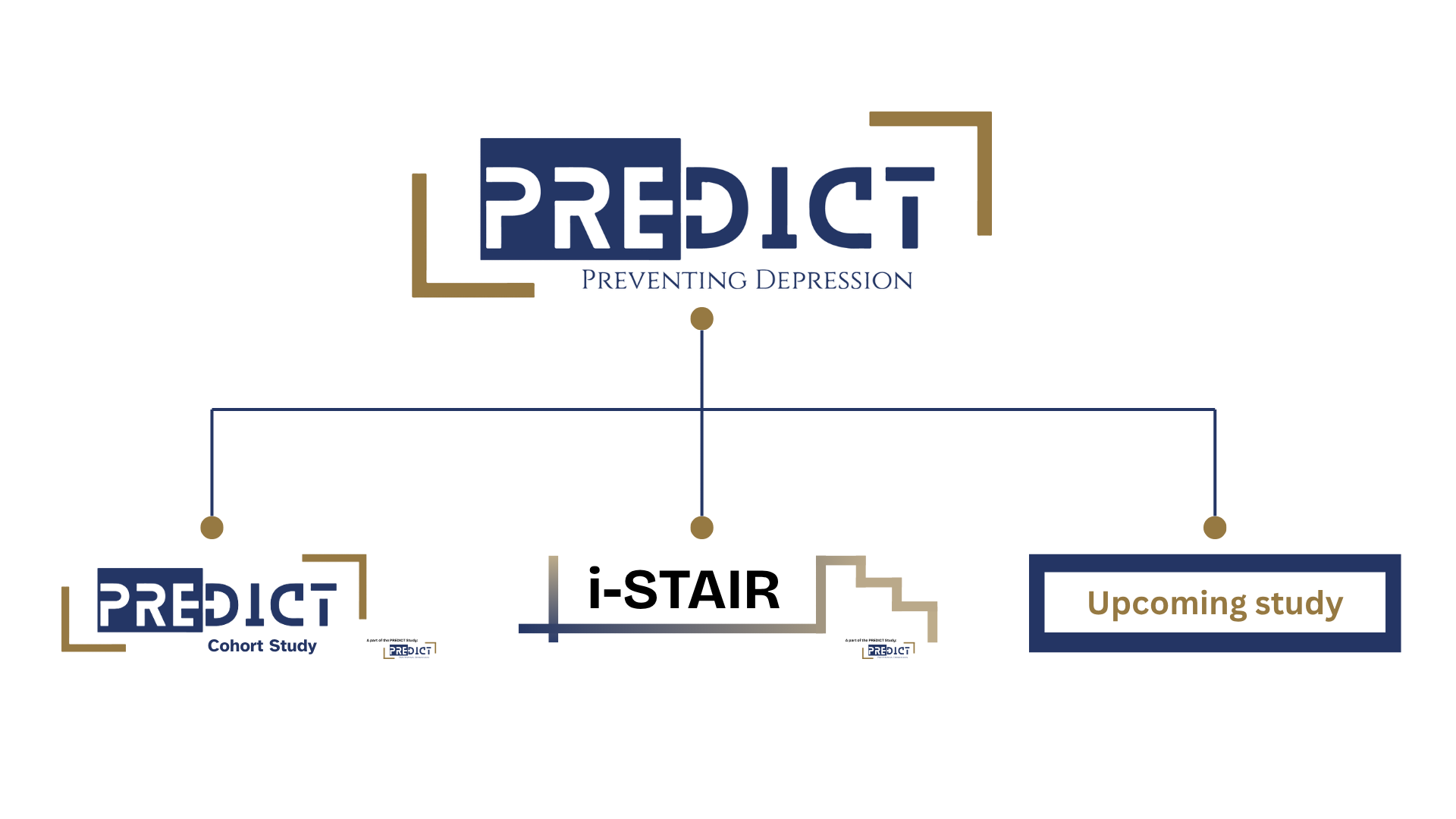
The PREDICT Study is a research project comprising of 3 different studies.
Study Goals
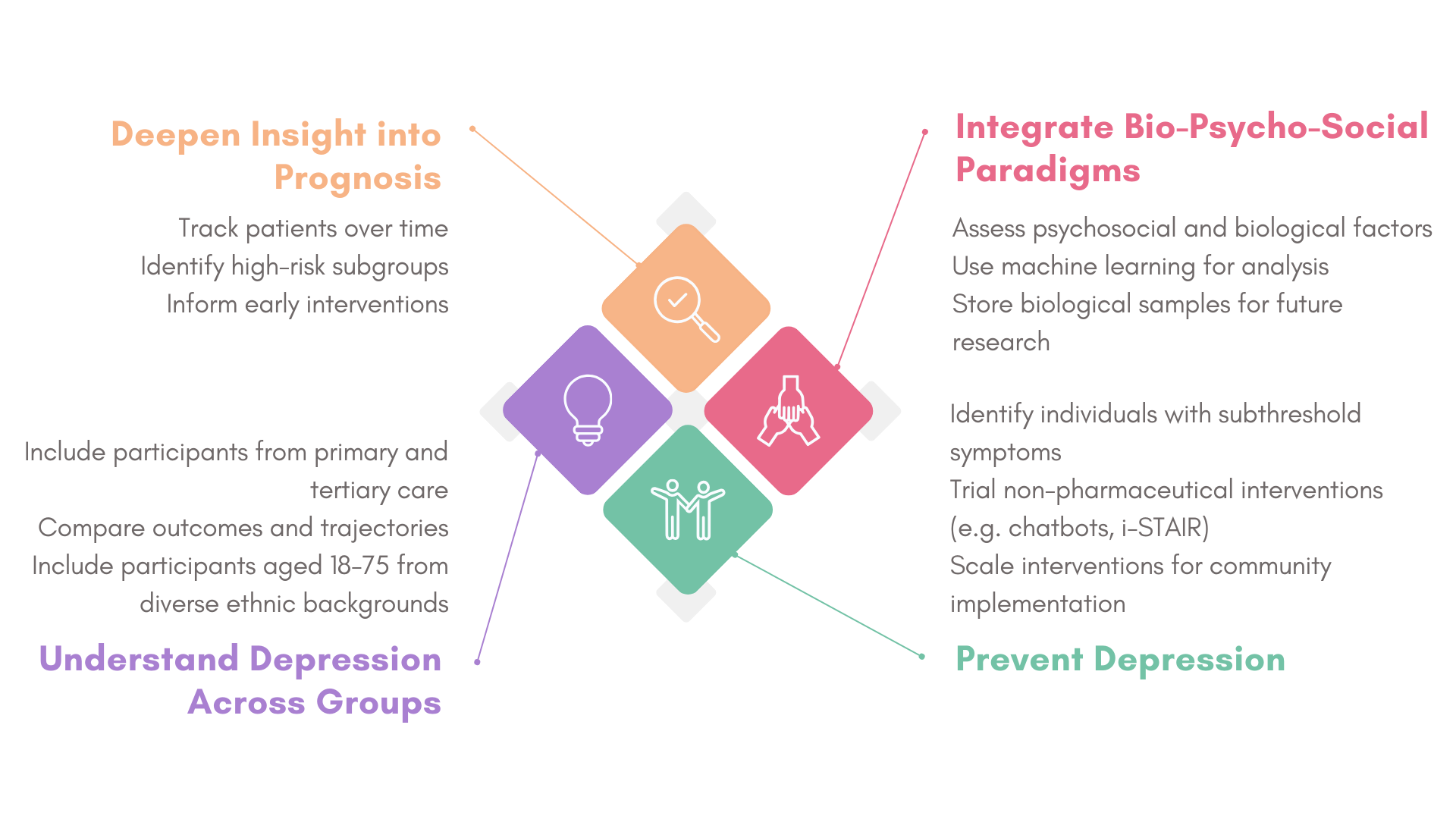
To Gain Deeper Insight into the Prognosis of Depressive Disorders
The study will track a cohort of individuals diagnosed with depression and subsyndromal depression over 5 years.
Information will be collected on age, employment status, social networks, psychological status, comorbidities, and baseline severity of symptoms.
The study aims to identify high-risk subgroups for persistent symptoms, guide early identification of this at-risk group and inform targeted clinical interventions.
Integrating Bio-Psycho-Social Paradigms for Comprehensive Understanding
Neurobiological factors
Neurobiological markers examined will include Brain-Derived Neurotrophic Factor (BDNF) and longitudinal cortisol levels via hair samples.
Inflammatory markers like C-Reactive Protein (CRP), and Tumor Necrosis Factor-alpha (TNF-α) will be monitored.
Psychosocial determinants
The study will explore the association of psychosocial factors including age of onset, loneliness, resilience, social support and stressful life events with depression.
Physical Health
Body weight and height measurement, hand-grip strength assessment and routine metabolic function tests (e.g., blood glucose, lipid profiles) will be measured to determine the development of comorbid physical health conditions in this population as well as the impact of depression on these conditions.
Determining the Outcomes of Depression
The findings of the study will provide insights into recovery trajectories, risk of relapse, and persistence of subthreshold symptoms in the Singapore context.
The study will include participants from both tertiary care (Institute of Mental Health, IMH) and primary care settings. This multi-site approach will enable comparison of outcomes and care trajectories across the two settings.
Prevention of Depression
The study will focus on subthreshold depression (SD), a significant risk factor for major depressive disorder (MDD).
Leveraging the population samples from epidemiological studies, the research will identify individuals with subsyndromal symptoms and trial two non-pharmaceutical interventions:
Chatbot interventions and Behavioral Activation with Mindfulness (BAM)
Internet-delivered Skills Training in Affective and Interpersonal Regulation (i-STAIR).